

NEWS DETAIL
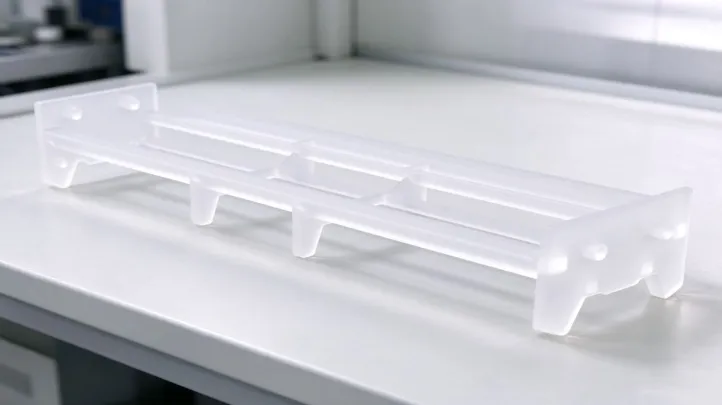
How Does Sandblasting Affect the Surface Properties of a Quartz Boat?
2026-11-23
Quartz boats are widely used to hold and transport silicon wafers during high-temperature diffusion processes in PERC (Passivated Emitter and Rear Cell) solar cell manufacturing. Since these components operate inside diffusion furnaces, their material quality and surface condition are important considerations. Besides the natural properties of quartz, surface treatment can also influence the appearance and physical characteristics of the finished component.
Sandblasting is one surface treatment method used for quartz products. It creates a distinctive matte texture by exposing the surface to abrasive particles under controlled conditions. For a Sandblasted Quartz Boat, this treatment changes the surface appearance and roughness, making it different from a transparent or polished quartz boat. Understanding these changes helps clarify when sandblasted surfaces are suitable for specific industrial applications.
How Does Sandblasting Change Quartz Surface Texture?
Sandblasting works by directing abrasive particles toward a material surface at controlled pressure. When the particles impact the quartz, they create numerous small surface irregularities. These microscopic changes produce a relatively uniform textured appearance rather than the smooth, reflective finish associated with polished quartz.
On a quartz boat, the resulting texture depends on several processing parameters, including abrasive particle size, blasting pressure, exposure time, and the distance between the blasting equipment and the workpiece. Different combinations can produce different surface finishes, from relatively fine matte textures to more pronounced roughness.
Unlike polishing, which removes surface irregularities to create a smoother finish, sandblasting intentionally modifies the surface texture. This distinction is important when specifying quartz components because the required finish should correspond to the intended application and cleaning procedures.
What Happens to Surface Roughness After Sandblasting?
Surface roughness describes the small-scale variations and irregularities on a material's surface. Sandblasting generally increases surface roughness compared with a polished quartz surface, although the actual result depends on the treatment conditions.
A rougher surface may have a greater effective surface area than a smooth one. It can also behave differently during contact, cleaning, and handling. For example, microscopic surface irregularities may influence how easily certain particles or residues can be removed. This means that cleaning procedures should be appropriate for the actual surface finish rather than assuming that all quartz components behave identically.
For a Sandblasted Quartz Boat, roughness should therefore be controlled rather than treated as an incidental result. Excessive or inconsistent blasting may create an uneven finish, while insufficient treatment may not achieve the intended appearance. Consistent processing helps maintain a more predictable surface condition across different components.
Why Does a Sandblasted Quartz Boat Have a Matte Appearance?
One of the most visible effects of sandblasting is the change in optical appearance. A polished quartz surface typically allows light to pass through with relatively little scattering, giving it a clear and glossy appearance. After sandblasting, microscopic irregularities scatter incident light in multiple directions.
As a result, the treated surface appears frosted, translucent, or matte rather than highly transparent. The exact appearance depends on the depth and distribution of the surface texture, as well as the original quartz material.
This difference is mainly an optical effect caused by surface scattering. It does not necessarily indicate a change in the chemical composition or bulk purity of the quartz. A sandblasted component may retain the underlying heat resistance and chemical characteristics of its quartz material, provided the treatment and subsequent handling do not introduce contamination or damage.
It is also important to distinguish surface appearance from optical performance. If a diffusion furnace relies on light transmission through a particular quartz component, the reduction in surface transparency may need to be considered during equipment compatibility assessments.
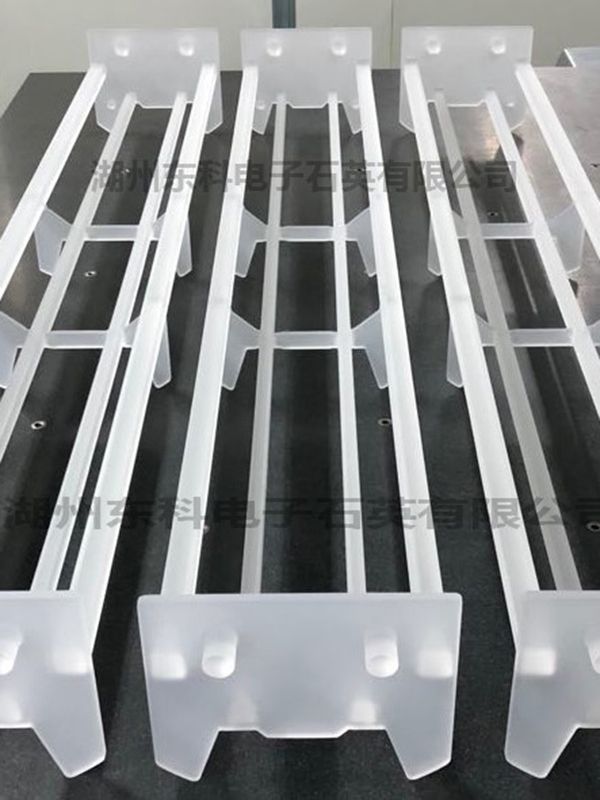
How Do These Surface Changes Affect Solar Cell Diffusion Applications?
In PERC solar cell manufacturing, quartz boats serve as carriers that hold silicon wafers during transportation into and out of high-temperature diffusion furnaces. Their surface condition is one of several factors that should be considered when evaluating component suitability.
First, the surface finish can influence cleaning and maintenance requirements. Because sandblasting creates microscopic irregularities, residues may interact with the surface differently than they would with polished quartz. Appropriate cleaning and inspection procedures are therefore important for maintaining the required cleanliness.
Second, the matte appearance may be relevant when optical access or light transmission is part of the equipment design. Sandblasting changes how light interacts with the treated surface, so the finish should be selected according to the actual furnace configuration.
Third, the surface treatment must not compromise the structural integrity of the quartz boat. The component still needs to withstand repeated exposure to elevated temperatures and the chemical environment of the diffusion process. Material quality, processing control, and inspection remain essential regardless of whether the surface is sandblasted or polished.
What Should Be Controlled During the Sandblasting Process?
Producing a consistent Sandblasted Quartz Boat requires attention to more than its final appearance. Several processing factors can influence the quality of the finished surface.
-
Abrasive particle size: Different particle sizes produce different surface textures and roughness levels.
-
Blasting pressure: Pressure affects the intensity of particle impact and should be controlled to avoid excessive surface damage.
-
Treatment uniformity: Consistent blasting across the component helps prevent noticeable variations in surface finish.
-
Post-treatment cleaning: Residual abrasive particles and processing contaminants should be removed before the quartz boat enters a high-purity production environment.
Inspection should also consider the component's overall geometry, surface condition, and any visible cracks or defects. These checks help ensure that the surface treatment does not interfere with the quartz boat's intended function.
Choosing the Right Surface Finish for Quartz Boats
Sandblasted and polished quartz boats serve different surface-finish requirements. A sandblasted finish offers a matte, textured appearance, while a polished finish provides a smoother and more transparent surface. Neither treatment is universally better; the appropriate option depends on equipment design, process conditions, cleanliness requirements, and optical considerations.
For PERC diffusion applications, selecting a suitable Sandblasted Quartz Boat involves evaluating both the quartz material and the finished surface. High purity, corrosion resistance, and high-temperature stability remain fundamental requirements. Surface treatment should complement these properties rather than replace them.
DKEQ Electronic Quartz provides customized quartz products for industrial applications, with surface finishing and product specifications considered according to actual equipment requirements. By matching material quality, component structure, and surface treatment, a quartz boat can be manufactured to meet the practical demands of solar cell diffusion processes.