

NEWS DETAIL

What Makes a Quartz Cage Boat Suitable for High-Temperature Semiconductor Processes?
2026-10-13
High-temperature semiconductor manufacturing places strict demands on wafer-handling components. During processes such as diffusion, oxidation, and chemical vapor deposition (CVD), supporting structures must withstand elevated temperatures, maintain dimensional stability, and minimize the risk of introducing unwanted contaminants.
A quartz cage boat is designed to address these requirements through a combination of high-purity quartz material and specialized structural engineering. Its perforated, cage-like configuration provides wafer support while allowing process gases to move through the surrounding space.
But what makes this component particularly suitable for demanding thermal applications? The answer lies in how its material properties and structural design work together.
Why Is Quartz Suitable for High-Temperature Semiconductor Applications?
Quartz is widely used in semiconductor processing equipment because its physical and chemical properties are well suited to controlled thermal environments. Compared with many conventional materials, high-purity fused quartz offers several advantages when exposed to elevated temperatures.
Thermal Stability and Low Thermal Expansion
One important characteristic of fused quartz is its exceptionally low coefficient of thermal expansion, typically around 0.5 × 10⁻⁶/K near room temperature.
This means that quartz undergoes relatively small dimensional changes during heating and cooling, helping reduce thermal stress caused by temperature fluctuations.
For a cage boat supporting silicon wafers, maintaining structural stability is essential. Excessive deformation could affect wafer positioning or interfere with the surrounding equipment.
However, thermal resistance does not mean quartz is immune to damage. Maximum operating temperatures depend on the quartz grade, component geometry, exposure duration, and processing conditions. Prolonged high-temperature exposure may also contribute to devitrification or deformation.
Chemical Resistance in Controlled Atmospheres
Semiconductor thermal processes frequently involve controlled environments containing nitrogen, oxygen, or other process gases.
Fused quartz provides good chemical resistance under many of these conditions, making it suitable for components that must remain stable during repeated processing cycles.
Its compatibility must still be evaluated against the specific process chemistry. For example, hydrofluoric acid and certain alkaline substances can attack silica surfaces, while some contaminants may accelerate material degradation at elevated temperatures.
Low Impurity Content and Contamination Control
Semiconductor manufacturing is highly sensitive to contamination. Even small amounts of unwanted metallic impurities or particles can negatively affect wafer quality.
High-purity quartz is therefore preferred for components that come into contact with wafers or operate close to critical processing areas.
For a quartz cage boat, material purity is only one part of contamination control. Surface finishing, manufacturing cleanliness, handling, and cleaning procedures also influence the condition of the finished component.
Selecting suitable quartz material and controlling these factors helps reduce potential contamination sources during semiconductor processing.
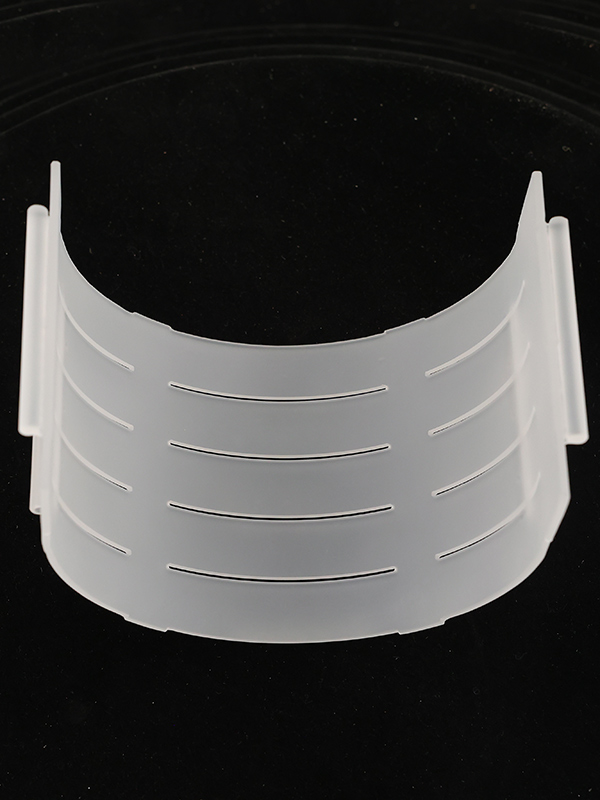
How Does the Perforated Cage Structure Improve Process Compatibility?
Material properties explain why quartz can withstand demanding processing environments, but the geometry of a cage boat is equally important.
Unlike a fully enclosed support structure, a quartz cage boat incorporates curved plates with multiple small holes. These perforations create open pathways around the component, allowing process gases to circulate through its structure.
Supporting Gas Exchange and Thermal Uniformity
During oxidation, diffusion, and certain CVD processes, gas distribution can influence the consistency of wafer treatment.
The perforated structure reduces unnecessary obstruction to gas movement and allows the surrounding atmosphere to reach different areas of the wafer-support assembly.
This design can contribute to more consistent gas exposure and heating conditions when properly integrated into the processing system.
However, perforations alone do not guarantee uniform processing. Actual gas distribution also depends on furnace geometry, gas flow rate, wafer arrangement, temperature control, and other operating parameters.
Balancing Open Structure and Mechanical Stability
A quartz cage boat must provide sufficient structural support while maintaining the open geometry required for its intended application.
Several design factors need to be considered together:
-
Hole diameter, spacing, and distribution.
-
Curved plate geometry and material thickness.
-
Wafer dimensions and supporting arrangements.
-
Compatibility with the furnace and matching quartz components.
Increasing the number or size of perforations may provide additional open area, but it can also affect the mechanical strength of the component.
Consequently, a custom cage boat should be designed according to the actual processing requirements rather than simply maximizing its perforated surface.
How Do Different Semiconductor Processes Influence Cage Boat Design?
Although quartz cage boats can be used in several high-temperature applications, each process introduces different considerations.
| Semiconductor Process | Relevant Design Considerations |
| Diffusion | Thermal stability, wafer positioning, and compatibility with the process atmosphere |
| Oxidation | Resistance to elevated temperatures and appropriate gas access |
| CVD Deposition | Process-gas compatibility, structural geometry, and contamination control |
A cage boat suitable for one process may require dimensional or structural adjustments before being used in another.
For this reason, custom manufacturing should consider the complete operating environment, including wafer size, furnace dimensions, processing temperature, gas chemistry, and installation requirements.
A Practical Example: Custom 6-Inch Quartz Cage Boat
A finished custom product offers a useful way to understand how these technical considerations translate into actual manufacturing.
The 6-inch Quartz Cage Boat produced by DKEQ features arc-shaped curved plates with numerous small perforations. It is designed for use with a matching quartz bottom and lid, forming an assembly intended for high-temperature wafer processing.
Its specified performance requirements include high-temperature resistance, corrosion resistance, thermal stability, high optical transparency, and low impurity content.
The product is intended for semiconductor applications such as diffusion, oxidation, and CVD deposition.
What makes this example particularly relevant is the relationship between its material selection and structural configuration. The transparent quartz construction reflects the use of a specialized material, while the curved and perforated plates demonstrate how the component geometry can be adapted to particular processing needs.
Manufacturing such a structure also requires attention to dimensional consistency, hole positioning, surface condition, and compatibility between the individual quartz components.
These details illustrate why custom quartz manufacturing involves more than reproducing an external shape. The finished component must correspond to the agreed technical specifications and intended equipment configuration.
Choosing the Right Quartz Cage Boat for Your Process
A suitable quartz cage boat must combine the right material properties with a structure that matches the intended semiconductor application.
High-purity quartz provides the foundation for thermal stability, chemical resistance, and contamination control. Meanwhile, the perforated cage design supports gas access and allows the component to be adapted to different processing configurations.
For applications requiring non-standard dimensions or specialized structures, custom manufacturing provides greater flexibility than relying exclusively on standard designs.
With experience in semiconductor quartz processing, DKEQ offers customized quartz components based on specific drawings and application requirements. Its completed 6-inch quartz cage boat provides a practical reference for evaluating structural design and manufacturing capabilities.
Ultimately, the suitability of a quartz cage boat depends on how effectively its material, geometry, and manufacturing specifications correspond to the actual processing environment.