

NEWS DETAIL
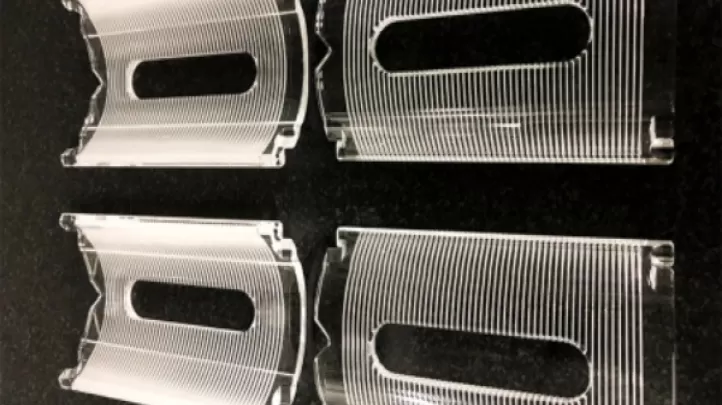
Differences between Standard and High-Purity Quartz Boats
2026-04-02
1Material Composition & Purity
The fundamental difference lies in the SiO₂ purity level and the concentration of metallic trace impurities.
| Property | Standard Grade | High-Purity Grade |
|---|---|---|
| SiO₂ Purity | 99.9% – 99.99% | ≥ 99.999% (5N+) |
| Metal Impurities | ~10–100 ppm total | < 1 ppm total |
| OH Content | Higher (~150–300 ppm) | Ultra-low (< 30 ppm) |
| Raw Material Source | Natural quartz sand | Synthetic or select natural crystal |
2Thermal & Mechanical Performance
Thermal Stability
High-purity boats exhibit superior thermal shock resistance and lower deformation rates at sustained temperatures above 1100 °C. Their tighter microstructure minimizes bubble formation and devitrification — a crystallization process that weakens the material over time.
Mechanical Strength
Standard boats may develop micro-cracks after repeated thermal cycling, shortening service life. High-purity variants maintain dimensional integrity over more cycles, reducing replacement frequency in high-volume fabs.
High-purity quartz boats can sustain operating temperatures up to 1250 °C with significantly lower risk of sagging or structural failure compared to standard grades.
3Contamination Risk & Process Impact
In advanced node semiconductor fabrication (28 nm and below), even trace metal contamination — measured in parts per trillion — can cause device failure. Standard quartz boats release metal ions at high temperatures, introducing defect-inducing contaminants into the wafer surface.
High-purity boats dramatically reduce this risk, making them mandatory in diffusion, oxidation, and annealing steps for logic and memory chips requiring stringent cleanliness standards.
4Application Scenarios & Selection
When to Use Standard Boats
Standard quartz boats are cost-effective solutions for lower-specification processes: R&D environments, legacy node production (≥ 90 nm), solar cell diffusion, and LED epitaxial processes where ultra-low contamination is not critical.
When to Use High-Purity Boats
High-purity boats are essential in advanced CMOS logic, DRAM, NAND flash production lines, and any process operating above 1100 °C with strict yield requirements. Their higher upfront cost is offset by reduced defect rates and longer service intervals.
Selecting the right grade is not only a material decision — it directly impacts yield, throughput, and total cost of ownership across the entire wafer fabrication process.