

NEWS DETAIL
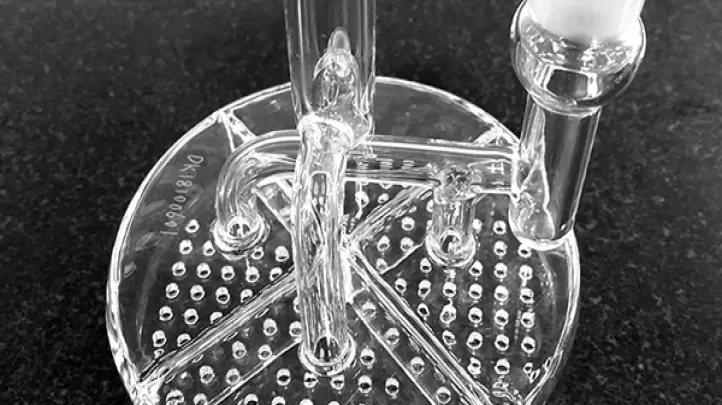
Quartz is a versatile and durable material that plays a crucial role in various industries, particularly in applications involving high temperatures. Understanding the thermal properties of quartz materials is essential for engineers, manufacturers, and researchers who work with heat-sensitive processes. In this article, we will explore the thermal conductivity of quartz, its insulation capabilities, thermal shock resistance, and its practical applications in heat-intensive industries.
Understanding Quartz's Thermal Conductivity
Thermal conductivity refers to the ability of a material to conduct heat. Quartz, a naturally occurring mineral, has a relatively low thermal conductivity compared to metals and ceramics. This property makes it an excellent candidate for heat management in various industrial applications.
At room temperature, quartz has a thermal conductivity of about 1.3 W/m·K. While this is higher than materials like wood or plastic, it is significantly lower than metals such as copper or aluminum, which are known for their high thermal conductivity. This lower conductivity allows quartz to maintain stable temperatures, preventing the rapid flow of heat through the material. As a result, quartz is ideal for use in applications where controlling heat flow is essential.
Why Quartz is Ideal for Thermal Insulation
One of the standout features of quartz is its ability to act as an excellent thermal insulator. Unlike metals, which quickly transfer heat, quartz's low thermal conductivity means it can resist the passage of heat, making it valuable in industries that require insulation.
In construction, quartz is used as part of composite materials in insulation panels and fireproof cladding. Its ability to resist heat flow helps to keep interiors cool in hot climates and safe in fire-prone environments. Additionally, quartz's durability in high-heat environments makes it a popular choice for insulation in furnaces, ovens, and other heat-sensitive equipment.
When combined with other materials, such as silica, quartz can further enhance its insulating properties. This makes quartz not only a practical material for thermal insulation but also an eco-friendly one, as it reduces energy consumption by preventing excessive heat loss.
The Role of Quartz in High-Temperature Applications
Quartz’s resistance to high temperatures is one of its most significant advantages. Quartz can withstand temperatures up to 1,700°C (3,092°F) without melting or deforming, making it suitable for high-temperature applications like glass manufacturing, semiconductor fabrication, and aerospace industries.
In glass manufacturing, quartz is used as a crucial component in the production of furnace linings and molds due to its ability to withstand extreme heat without breaking down. Similarly, in the semiconductor industry, quartz tubes and wafers are used to create controlled environments during the production of microchips, where high-temperature processes are common.
Aerospace engineers also rely on quartz materials for components like insulation blankets and heat shields. These applications demand materials that not only withstand high temperatures but also retain their structural integrity in extreme conditions, which quartz delivers reliably.
Thermal Shock Resistance: How Quartz Performs
Thermal shock resistance is the ability of a material to resist cracking or breaking when exposed to sudden temperature changes. Quartz has an impressive thermal shock resistance, which is crucial in environments where rapid temperature fluctuations are common.
Unlike many other materials, quartz doesn’t crack or shatter when exposed to sudden thermal changes. This is due to its low coefficient of thermal expansion, meaning it doesn't expand or contract dramatically when heated or cooled. This property is essential in industries where materials undergo rapid temperature variations, such as in the production of cookware, laboratory equipment, and certain mechanical parts.
In the automotive and aerospace industries, quartz's resistance to thermal shock helps protect components that experience frequent and sudden temperature fluctuations. The ability of quartz to withstand these conditions without compromising its strength or performance makes it indispensable in various high-tech applications.
Practical Applications of Quartz in Heat-Intensive Industries
Quartz’s thermal properties make it indispensable in several heat-intensive industries. From industrial manufacturing to advanced electronics, quartz materials are used for their strength, thermal resistance, and versatility.
In the semiconductor industry, quartz is used to fabricate essential components such as crucibles, tubes, and wafers. These parts are exposed to extreme temperatures during the manufacturing process of semiconductors and microchips. Quartz’s ability to withstand high heat without deformation ensures the precision and efficiency of these processes.
In glass manufacturing, quartz is used for furnace linings, molds, and other critical components. The ability of quartz to endure the intense heat of molten glass makes it an ideal material for this industry, where temperature control is vital for producing high-quality glass products.
The aerospace industry also benefits from quartz materials, particularly in the form of heat shields and thermal blankets. These components protect sensitive instruments and equipment from the extreme temperatures encountered during reentry and flight, ensuring that they remain intact and functional.
Moreover, quartz is used in heat exchangers, where its ability to manage high temperatures and thermal expansion is critical to maintaining efficiency in industrial systems. In environments that involve constant temperature cycling, quartz components help prevent heat loss and maintain system stability.